Tools developed
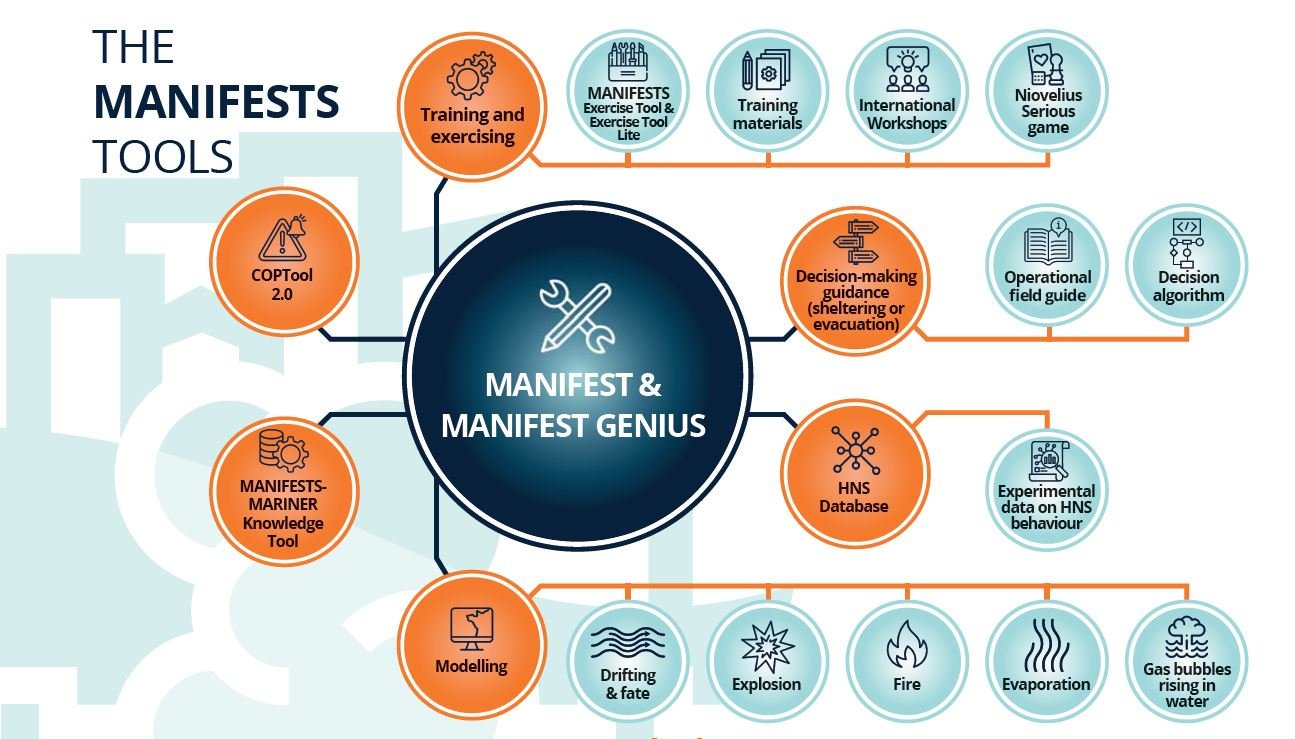
- The MANIFESTS tools compilation booklet
- HNS Database
- Operational Field Guide
- The MANIFESTS Knowledge Tool
- The MANIFESTS Exercise Tool
- Exercise Tool Lite - collaborative version
- Explosion Model
- Fire Model
- OSERIT Model - HNS module
- SubseaGasLeak Model
- COP Tool 2.0
- MOHID Model HNS
- Niovelius Serious Game
MANIFESTS Tools compilation booklet
Booklet containing containing concise factsheets describing each of the tools that compose the MANIFESTS Genius Decision Support System (DSS).
Download the MANIFESTS booklet
HNS database
https://manifests-project.eu/hns-database/
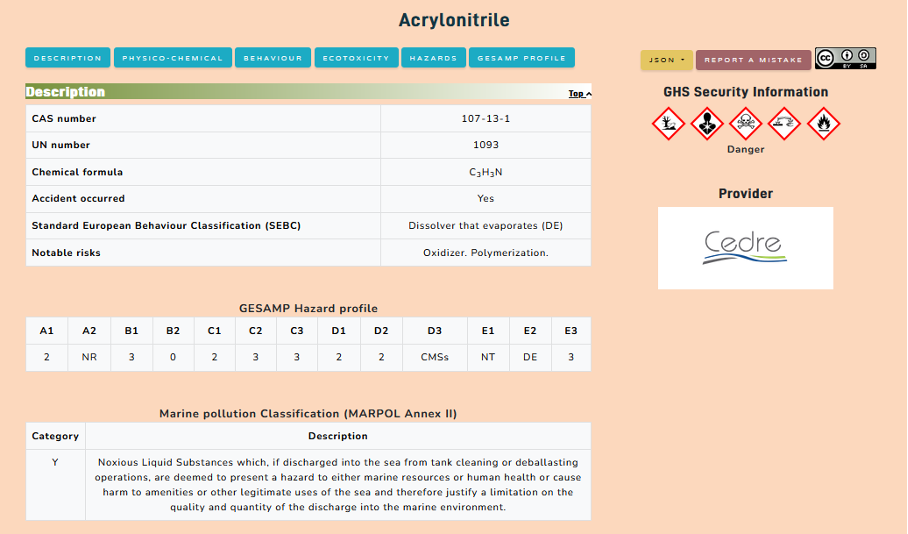
The HNS Database aims to provide access to useful information to over 600 chemicals identified as HNS, each with up to 100 physical and chemical parameters.
The chemicals available are from the MIDSIS-TROCS database (from REMPEC) and from the HNS-MS database (from Cedre). It incorporates experimental data collected in seawater environments, as well as updated results from the MANIFESTS and MANIFESTS genius project. Users can easily retrieve chemical data through the interface or access it from an API.
The online database is an alphabetical list of chemicals with detailed information in a technical datasheet for each chemical. The user can access this information by clicking on a row to view details or search by name, CAS Number or UN Number. Each datasheet is available to download in JSON format.
Download PowerPoint presentation
Operational Field Guide - Protecting Communities from Maritime Incidents Involving Airborne Pollutants
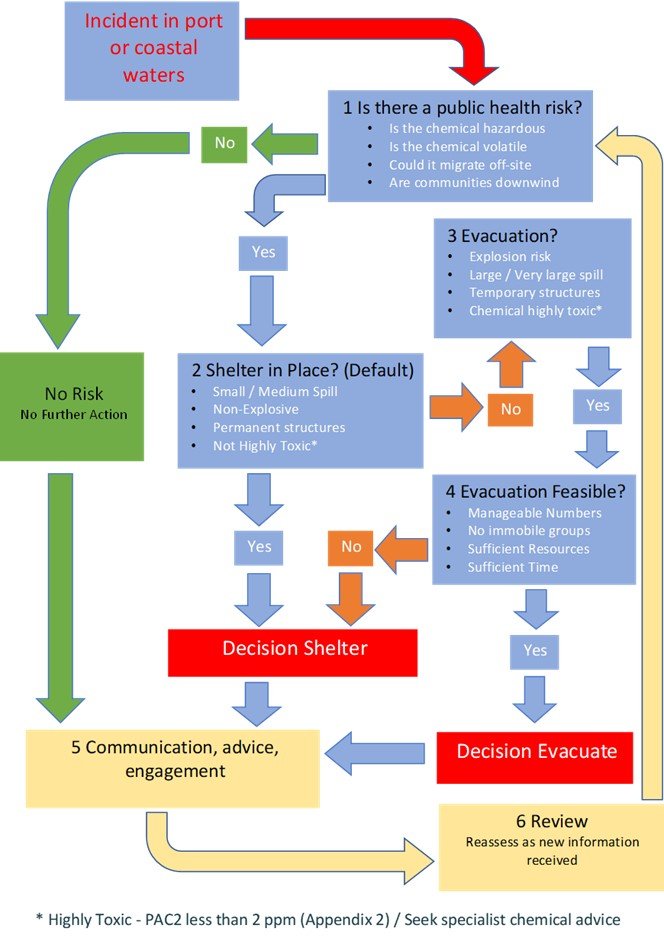
The aim of this guide is to aid decision making in the immediate aftermath of an incident, prior to receipt of detailed monitoring and modelling data.
The guide is aimed at those involved in managing initial response as well as those with emergency planning roles. It is targeted at protection of the public and not response personnel located within the immediate source of the incident.
It comprises a decision algorithm based upon a source-pathway-receptor approach, a range of prompts and considerations to be made at key points during the assessment process, key information resources and summaries of key hazard data for multiple gaseous and volatile HNS. A separate detailed guidance document details the development of the approach and should be read before using the operational guide.
Download PowerPoint presentation
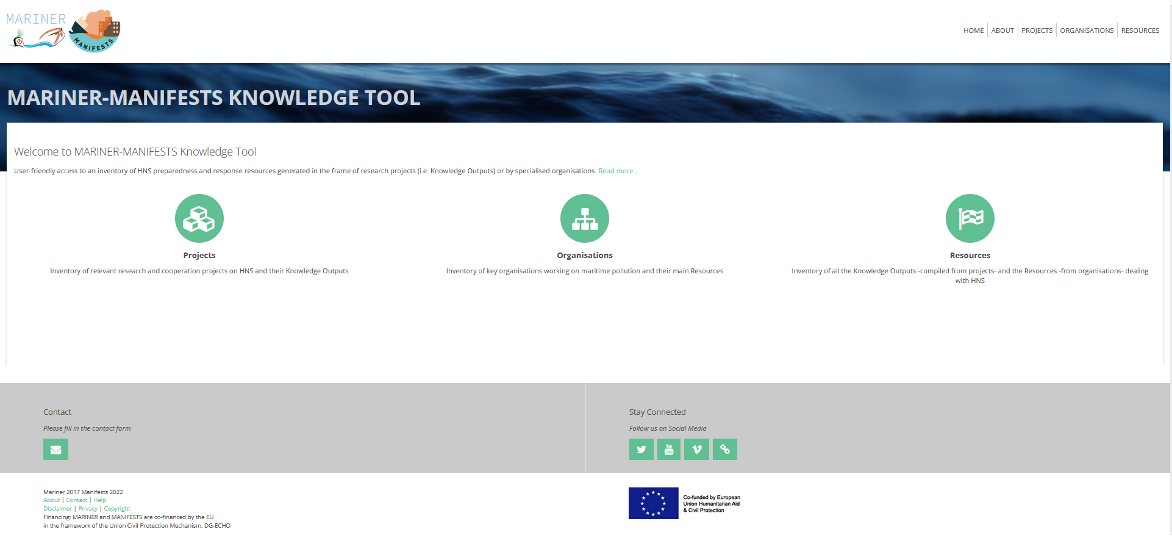
The MANIFEST-MARINER Knowledge tool
http://knowledgetool.mariner-project.eu/
The MMKT is an online repository that provides access to a comprehensive collection of marine research and technical resources focused specifically on preparedness and response to HNS spills.
It is a user-friendly online database equipped with search functions that allow users to explore an inventory of HNS preparedness and response resources generated through research projects (i.e., Knowledge Outputs) or produced by specialised organisations.
Search results can be downloaded in various formats (XLS, CSV, RTF, PDF), with the option to select which fields are displayed. Additionally, charts and statistics summarizing data stored in the database can be downloaded as PNG files.
The platform also includes a feature that enables users to add new resources.
Download PowerPoint presentation
The MANIFEST Exercise Tool
https://exercisetool.cetmar.org/
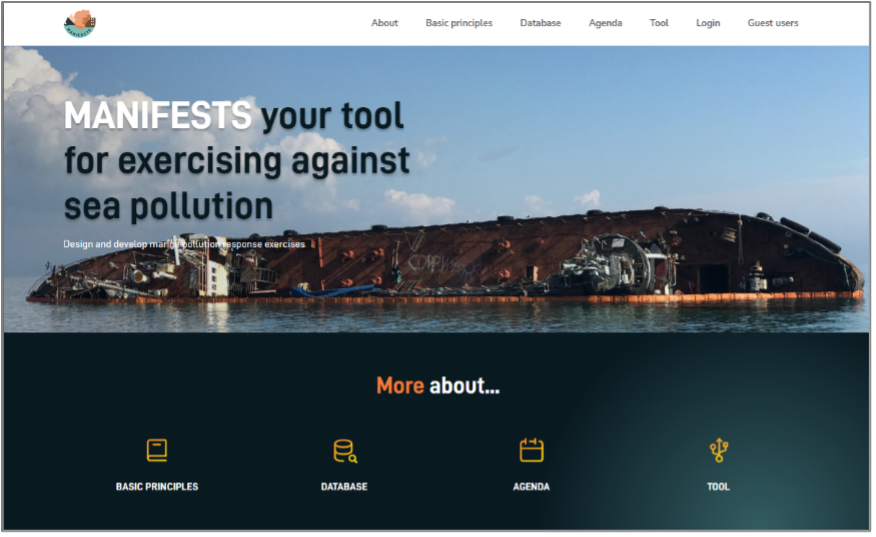
The main objective of the MANIFESTS Exercise Tool is to strengthen training and exercise capacities of response organisations by providing knowledge, guidance and resources to prepare, develop and evaluate marine pollution response exercises. It also facilitates the creation of exercise programs, enabling replication, lesson learning and collaboration with other organisations.
The exercise tool consists of four functionalities:
- Basic principles, describing the fundamentals of this topic and other support information.
- The Exercises Database, an online repository containing more than 150 exercises and related documentation published by international organisations.
- An Agenda, for creating a program of exercises.
- The Exercise Formulation Tools, where users can create their own exercises.
The Tool is available in four languages: English, French, Portuguese and Spanish.
Download PowerPoint presentation
EXERCISE TOOL LITE - collaborative version
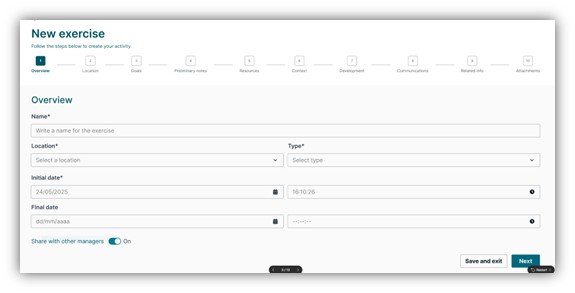
The Exercise Tool Lite is an optimized and streamlined tool derived from the MANIFESTS Exercise Tool. As a lite, simplified, and user-friendly version, it offers selected key features of the Exercise tool module and provides a collaborative platform for coordinating the formulation of exercises by responsible organisations.
The tool guides users in the formulation of exercises through a series of steps and associated forms in which information can be entered regarding location, background, scenario, resources, equipment used, etc. Once exercises have been performed, users will be able to evaluate the different aspects of the exercise.
Users will be able to create and share briefing and debriefing reports based on the information included in the different sections of forms of the tool.
Download PowerPoint presentation
Explosion model
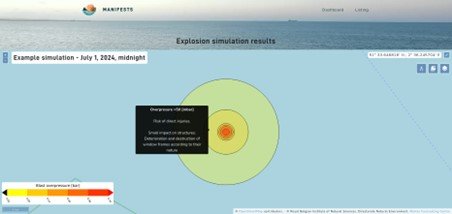
The explosion model aims to predict the effects of the explosion of a HNS gas cloud in an open environment.
The model estimates overpressure as a function of distance in case of the explosion of an HNS gas cloud and assesses its impact on humans and buildings.
The web interface enables users to perform simulations directly online. By filling out a form with event-related information, users can obtain simulation results within seconds. Both the form and simulation results are available from a web browser.
Download PowerPoint presentation
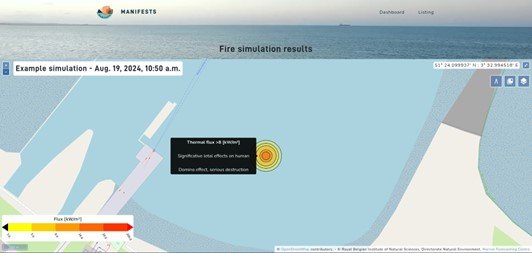
Fire model
The fire model aims to predict the effects of the fire of an HNS slick spilled on the water surface in an open environment. It estimates the safety distances at which responders can safely approach during such incidents.
The model estimates thermal fluxes as a function of distance from a burning slick and assesses the expected impact on humans and structures. It also estimates the burning rate and burning time.
The user fills out an online form with simulation metadata, event location and time, environmental data, and HNS properties (can be auto-filled from the HNS database). After waiting a few seconds, the simulation results are displayed in the online web interface.
https://odnature.naturalsciences.be/oserit/
Download PowerPoint presentation
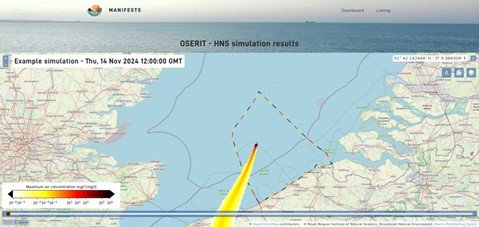
OSERIT HNS
The model OSERIT HNS assesses the drift and fate of an HNS spilled at sea by simulating its movement in the water and in the air, using current and wind predictions, and evaluating phase transfer.
It estimates the location over time of HNS spilled at sea, including concentration in the water column and air for volatile HNS, and predict potential beaching locations and times. The model uses daily updated forcings to enable simulations for both past event and future evolution of current situations. It supports forward simulations to assess the impact of a release and backward simulations to determine the origin of pollution.
The user fills out an online form with simulation metadata, event location and time, release conditions, and HNS properties (can be auto-filled from the HNS database). After waiting a few minutes, the simulation results are displayed in the online web interface.
https://odnature.naturalsciences.be/oserit/
Download PowerPoint presentation
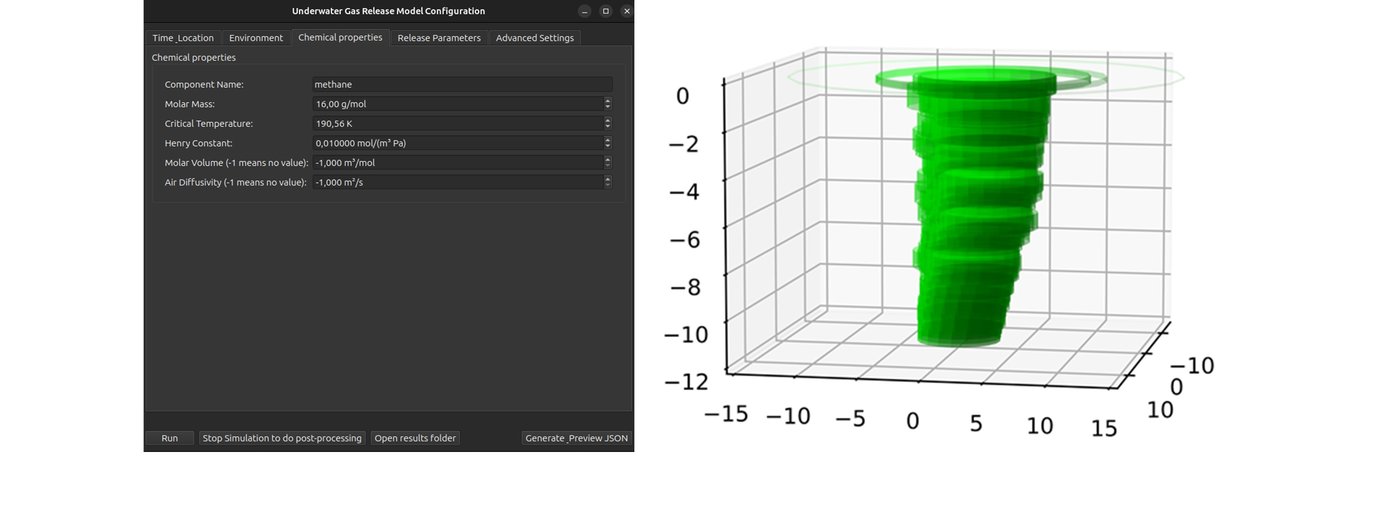
SubSeaGasLeak
The SubSeaGasLeak model simulates the rise of gases through the water column and estimates the exchange of matter between the gas bubble and the surrounding water.
The model estimates the flow rate of gas reaching the surface and the amount dissolving in the water column.
Users can run the software directly on their own computers. After entering all the required information about the event to be simulated, they can start a simulation that runs for a few seconds to minutes. Once completed, various result figures become available for interpretation.
https://odnature.naturalsciences.be/oserit/
Download PowerPoint presentation
COP tool 2.0
https://github.com/MANIFESTS-DSS
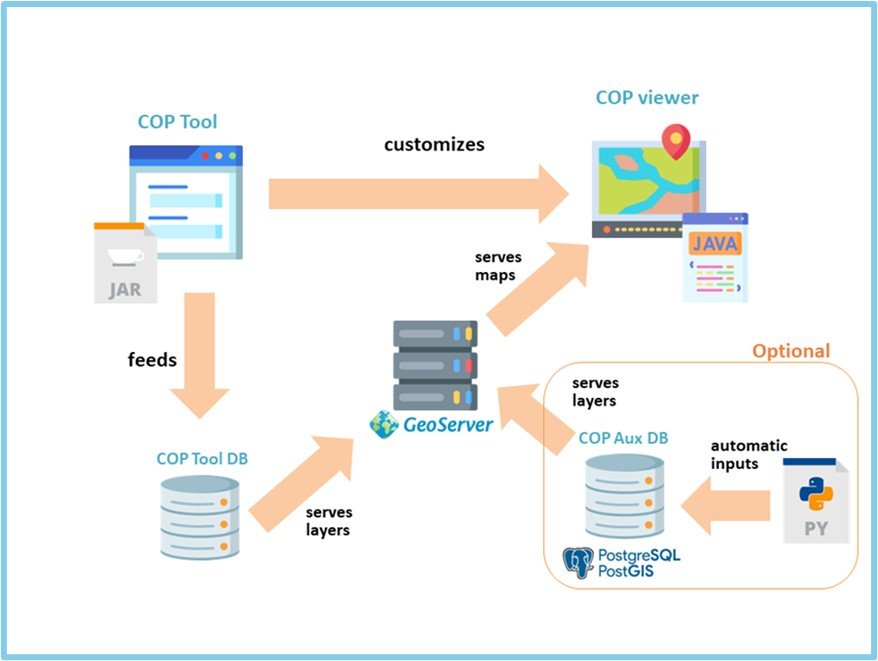
COPTool helps manage marine pollution incidents by integrating and organizing key data from multiple sources. It lets managers quickly create tailored COPs, showing only relevant info to each user. New features include a tactical GIS module, dashboard, info sheet generator, and integration with Exercise and Knowledge tools. The system is containerized with Docker for easy deployment.
Before a contingency, managers upload WMS layers and set user roles (viewers, contributors, managers). During an incident, a COP is created with selected layers and linked reports. Viewers access only authorized data; contributors upload new info (e.g., POLREP, SCAT). External systems (e.g., models, drifters) also feed data. A tailored COP can be deployed in minutes for efficient, role-based response.
Download PowerPoint presentation
MOHID model - HNS module
MOHID HNS is a numerical model able to predict and analyze the behavior of hazardous and noxious substances (HNS) in aquatic and atmospheric environments.
MOHID HNS simulates chemical spills (oils, dissolved/sinking substances) using Lagrangian particle tracking. It models advection, diffusion, evaporation, dissolution, emulsification, and sedimentation. Integrates with 3D hydrodynamics (currents, wind, waves) for accurate spill behavior.
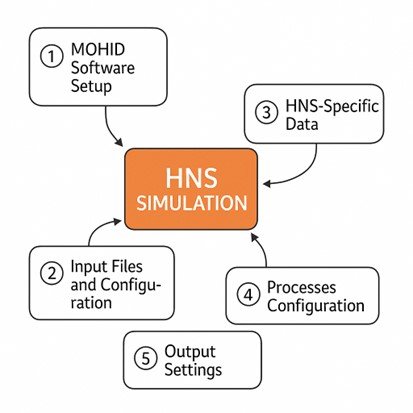
To perform a simulation, it is necessary to:
- gather spill details (location, chemical type, volume) and environmental data
- define model domain, resolution and configure the MOHID model files
- execute the simulation with hydrodynamic forcing
Download PowerPoint presentation
Niovelius Serious Game
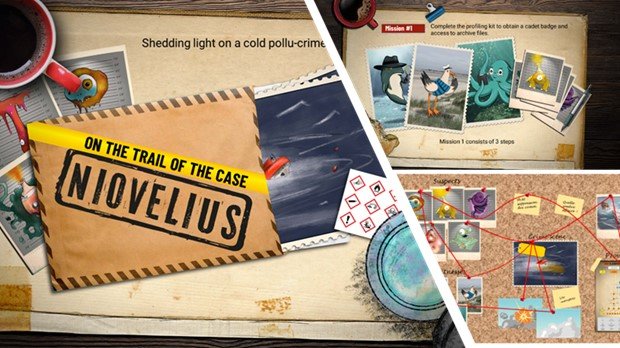
The Niovelius serious game has been developed to help crisis managers deal with accidental HNS pollution. Trainees apply to become investigators in a team specialised in the fight against pollu-criminals responsible for serious crimes against the seas and oceans. The aim is to understand the issues related to pollutants spilled in the maritime environment and to learn the different phases of crisis management, by working in a collaborative manner.
Niovelius serious game aims to support the training of professionals who are not experts in accidental pollution at sea by:
- giving them a better understanding of the behaviour of chemicals released at sea (HNS)
- making them discover the crisis management of these events
Download PowerPoint presentation