In the framework of the project a series of events were organised to transfer decision-making tools to stakeholders and authorities involved in maritime and inland response to chemical accidents. These include fire services, maritime and Civil Protection agencies and at international level, the regional agreement Contracting parties (BONN, as well as EMSA).
Training activities and workshops were organised in each of the partner countries in France, Belgium, Spain, and UK to showcase project outputs and to promote stakeholder engagement.
At regional and international level, training activities were organised coupled with Agreement meetings (HELCOM, Bonn Agreement and REMPEC) to show the decision-making tools developed by the project.
All results from the various workshops are available in Deliverable 4.3, in the publication section.
MANIFESTS Genius Training Workshops
- Training courses in Belgium
- Training workshop for UK emergency response stakeholders
- Training in France
- Training workshop in Spain
- Training at international level
- Final Conference of the MANIFESTS project
Training courses in Belgium
During the MANIFESTS Genius project, the institute of Natural Sciences did several presentations and exercise using the new capabilities and model that have been developed during the MANIFESTS and MANIFESTS Genius projects.
On the 31st of May 2024, the new capabilities of OSERIT HNS along with the fire and explosion model have been presented in Bruges at a Overlegorgaan with all the Belgian coastguards linked institutions. This allowed all the Belgian responders and stakeholders to be aware of the existence of these new tools and be ready when then are used.
In September 2024, the modelling app (OSERIT HNS and the explosion model) was used in a real emergency situation, as an incident occurred with the vessel MV RUBY. This vessel was carrying ammonium nitrate and had issue with his engine. Simulations have been performed to assess the impact in case of an explosion of this cargo, mainly providing safety distance to keep from the vessel for the responders. These simulations where very useful to disseminate the model capacity with a concrete example use case. They were shown at OTSOPA, to most of European responders.
On the 4th of April 2025, the Belgian maritime police was trained on OSERIT model.
In June 2025, an exercise at sea took place in Belgium with Belgian, French and UK pollution responders. Simulations results were shown to the responders along modeler interpretation. This allows to test and improve the communication between the coastguard institutions and to familiarize the responders with the models outputs.
Apart from these national meeting, the MANIFESTS web interface, the models, and the HNS database have been presented to the group UKSpill, on the 3rd of July 2025. This group composed of many stakeholders from various organization including ship owners, ports, responders, spill modeling companies… Stakeholders from modeling and responders groups attended the meeting, with the objective to gain knowledge on the tools developed during both MANIFESTS project.
Training workshop for UK emergency response stakeholders
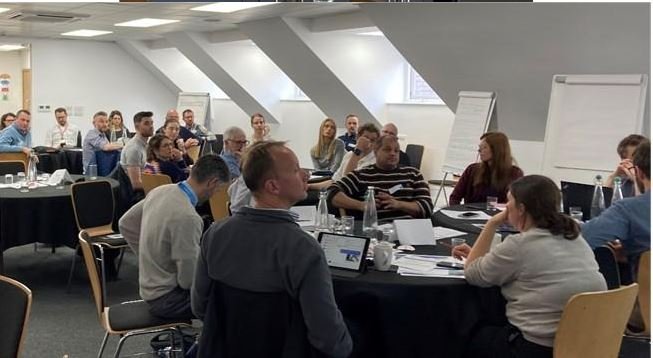
The UK Health and Safety Agency organised a one-day face to face workshop, focussed on emerging new fuels and aimed at testing current resilience. The event was held in Birmingham on 19th March 2025 and comprised presentations outlining the MANIFESTS Genius Project and developments around new fuels, followed by a short desk top exercise.
The exercise involved a fictitious scenario of a subsea leak of ammonia resulting in a major fish kill and subsequent onshore impacts. This was further complicated by an incoming passenger ferry, with an electric vehicle fire on board. Delegates were placed into 3 groups, with a representative distribution of agencies and industry bodies in each group.
The exercise comprised time sequenced injects to assess alerting, source investigation, response and public engagement. The final 3 injects required decisions around the passenger ferry. A facilitator from UKHSA was allocated to each table to observe and guide discussions. After each inject the groups were asked to provide feedback which was recorded for later review.
Training in France
A 2 hours training was held at CEDRE, in Brest, during the “Chemical spill response at sea” course on November 6th, 2025. A number of 13 participants attended the training. The structure of the workshop followed the same format as the international workshops conducted by CEDRE.
For this training, the incident scenario involved a LNG spill at the terminal of Nynäshamn, Sweden, caused by a collision between two vessels. The exercise started when the vessel was docked at the port. The crew had been evacuated from the boat so the crisis management only focuses on the chemical risk at stake. The Artic Pearl vessel is in poor conditions, but no leak happened at this stage.
The exercise started when the vessel was docked at the port. The crew had been evacuated from the boat so the crisis management only focuses on the chemical risk at stake. The Artic Pearl vessel is in poor conditions, but no leak happened at this stage. The 13 participants present at the training were split into 4 different groups of 2 to 4 people. There were no roles defined, all participants were working on the response management by sharing their own expertise.
The exercise was set to last 1 hour and 20 min, with the following time allocated for each part:
− 1rst part: Chemical expertise (HNS database): 20 min;
− 2nd part: Risk assessment (Modelling App): 30 min;
− 3rd part: Public Health risk (response algorithm of the Operational Field guide): 15 min;
− 4rth part: Response (knowledge tool): 15 min.
Training workshop in Spain
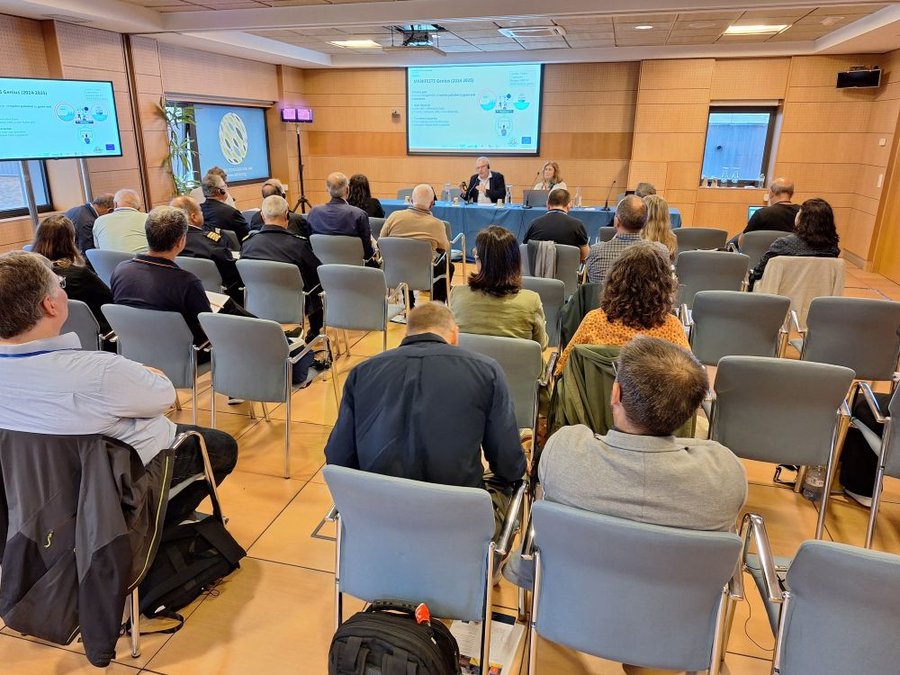
On June 4th, 2025, the CETMAR Foundation (Vigo, Spain) hosted the “Workshop on risk assessment of gases and volatile substances and the integrated management of marine and terrestrial pollution incidents”, framed in the MANIFESTS Genius project, funded by DG ECHO.
Building on the outcomes of the MANIFESTS project (2021-2023), MANIFESTS GENIUS aims to strengthen preparedness and response capacities for the integrated management of accidental pollution. The project primarily focuses on developing accessible knowledge and tools for end users, facilitating their preparedness and response to the release of hazardous and noxious substances (HNS), including alternative fuels such as ammonia, methanol, and liquefied natural gas (LNG), which in the event of an accident could form toxic gas clouds with explosion risks and/or drift toward the coast, impacting local communities.
The Workshop aimed to present MANIFESTS and MANIFESTS Genius tools by using practical cases, assess the different potential application of the tools during crisis management and promote its use by the organizations attending the event. Scenarios were provided for illustrative purposes.
The Workshop featured the participation of the MANIFEST Genius partners together with experts and professionals from the maritime sector including representatives from Regional and National Coastguard Services (Gardacostas de Galicia, Salvamento Marítimo), Port Authorities (Port of Coruña, Port of Vigo), Maritime Competent Authorities (Ministerio de Transportes, Dirección General de la Marina Mercante, Capitanías Marítimas), Research Institutes (IEO) and Environmental Companies (EuroFins-IPROMA).
Throughout the sessions, speakers could share their knowledge and experiences with 58 attendees, who were able to follow the event either in person or online.
A first presentation by CEDRE, project coordinator, provided an overview of the MANIFESTS & MANIFESTS Genius projects, making emphasis in the vocation of the project to deliver tools that can be transferable and applicable by those in charge of HNS spill preparedness and response. Following a keynote lecture presented by EMSA on the “Challenges from alternative fuels”, the first part of the day focused on the topic “From chemical knowledge to risk assessment” in which RBINS and the IMT presented key resources as the HNS database and different modelling tools (explosion, fire, OSERIT HNS and underwater gas release models). The second part addressed “Public health risk and response” presenting relevant response tools such as the operational field guide on sheltering or evacuation (UKHSA), the MARINER-MANIFESTS Knowledge tool (CETMAR) and the Common Operational Picture Tool (INTECMAR).
The workshop continued in the early afternoon with a session dedicated to present “Training” tools such as the online exercise tool (CETMAR) to facilitate the preparation, development and evaluation of exercises and the Novelious game ((IMT) created to raise awareness and prepare crisis managers to deal with accidental marine pollution by HNS.
The Workshop finalized with an open debate where participants could resolve their doubts and confirmed the interest generated by the project and associated tools and their willingness to further explore their applicability.
The event also counted with the collaboration of the Technological Platform for Coastal and Marine Environment Protection (PROTECMA), coordinated by CETMAR. This platform brings together numerous potential end users of the project’s results, including authorities responsible for responding to accidental pollution, coast guards, port authorities, and technology providers.
The event recordings are accessible via the following links:
Spanish:
English:
Presentations:
Training at international level
In order to improve awareness on decision-making tools available for crisis management, CEDRE organised a series of trainings in the form of tabletop exercises. The objectives of the tabletop exercise were as follows:
− Presentation and use of the MANIFESTS Genius tools;
− Assess the different potential uses of the tools during crisis management;
− Convince participants to promote MANIFESTS Genius tools to their chemical experts.
The workshop typical structure begins with a presentation of the MANIFESTS Genius project, followed by an introduction to the MANIFESTS Decision-Support System (DSS) tools included into the tabletop exercise. Based on a specific incident scenario, the exercise is then conducted to allow participants to engage in the practical use of these tools. The remaining tools of the MANIFESTS DSS that are not addressed during the exercise are subsequently presented at its conclusion.
Three international training sessions were initially planned, coupled to Regional Agreement meetings: Regional Marine Pollution Emergency Response Centre for the Mediterranean Sea (REMPEC), Bonn Agreement and Baltic Marine Environment Protection Commission (HELCOM).
The first training session was held at REMPEC on 15 May 2025, with the participation of 16 Contracting Parties to the Barcelona Convention, while the second took place on 22 May 2025 during the OTSOPA meeting, involving 11 Contracting Parties to the Bonn Agreement. Unfortunately, the training session originally planned with HELCOM contracting Parties could not be held due to scheduling constraints, as no suitable dates were available before the end of the project’s eligibility period on 31 March 2026. However, an additional training session, not initially planned, was organised in October 2025 for the new beneficiaries of the MAR-ICE service, alongside an HNS-EMSA training hosted at CEDRE (8 states involved).
The first workshop was held on 15 May during the Focal Points meeting in Sliema, Malta, with over forty participants. Printed documents and "tool" cards were provided. Based on a maritime incident scenario simulating a methanol leak in the Greek port of Piraeus, the participants, split into small groups, used the MANIFESTS Genius tools to manage events. The second workshop, based on a different scenario involving an ammonia leak in the French port of Le Havre, was run on 22 May for around ten participants at the meeting held at Cedre. The third training workshop took place on the 23 October 2025 and gathered 12 people attendees and the focus was set on an incident involving LNG at the terminal of Nynäshamn, Sweden.
Final Conference of the MANIFESTS Genius project
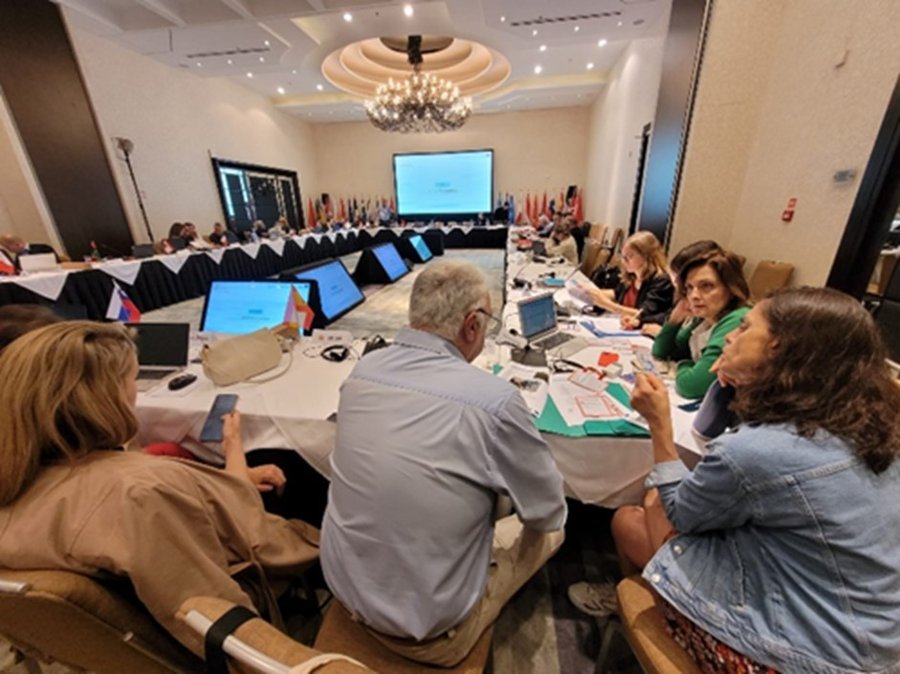
The final meeting of the MANIFESTS Genius project took place in Brussels on the 4th-5th March, bringing together experts, partners, and stakeholders from across Europe. It was a key moment to review two years of intensive collaboration and to discuss operational risks at sea and in ports, human health considerations, as well as the impacts of the HNS Convention on maritime and port authorities.
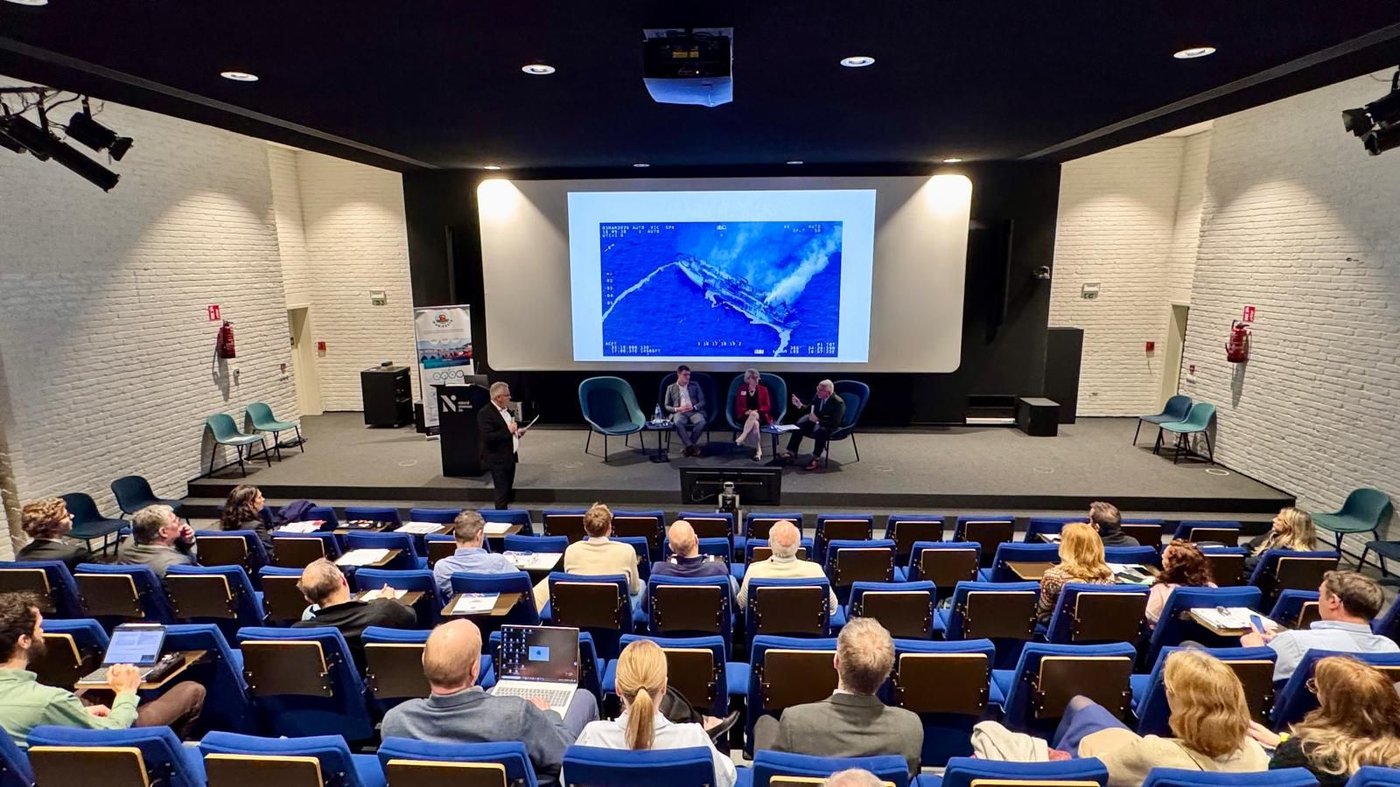
Gillian Grant (International Oil pollution Compensation Funds - IOPC Funds), Jasper Cornellis (Port of Antwerp-Bruges) and Pablo PEDROSA (DGMM) were invited as speakers in charge of keynote presentations and fostered insighful discussions in the round table.
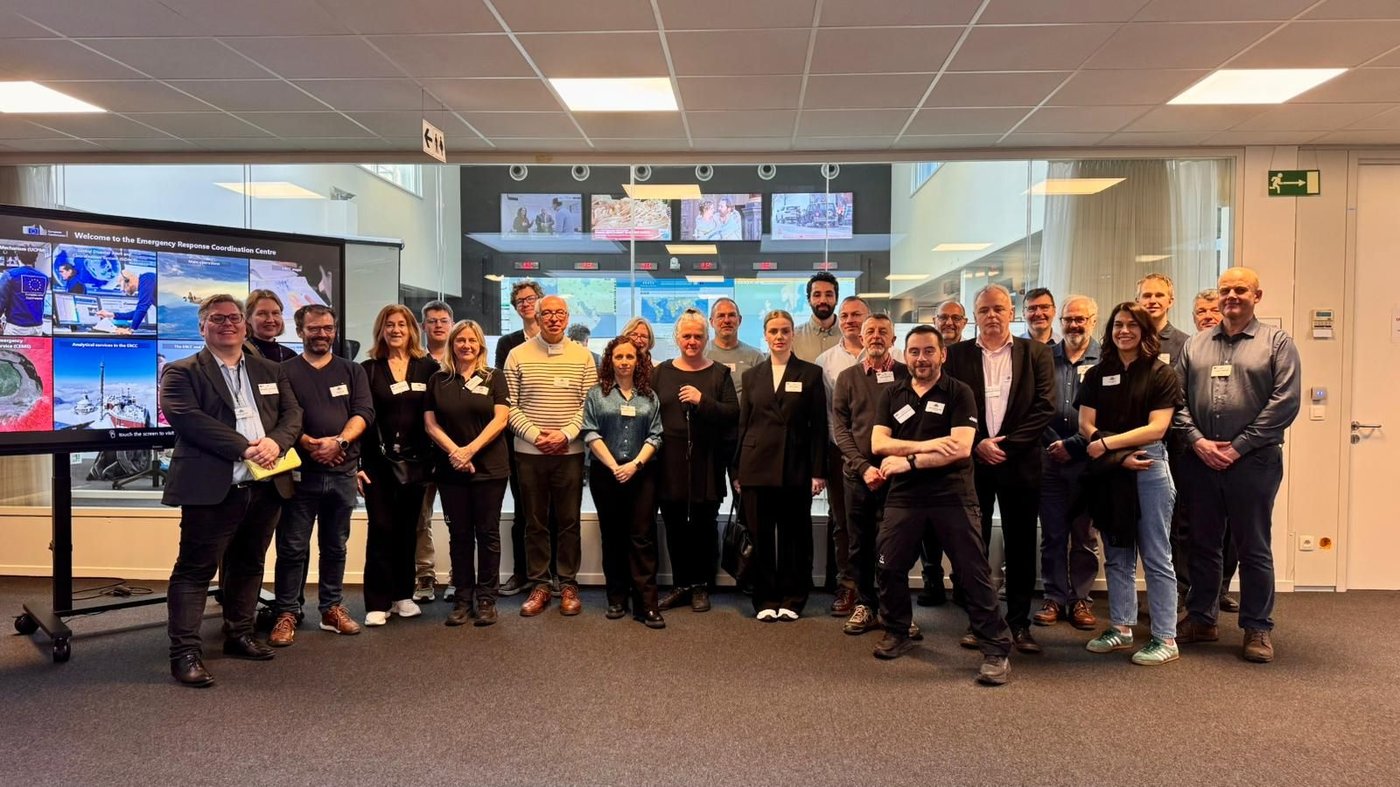
After the event, participants were invited by DG ECHO to an interesting visit to the Emergency Response Coordination Centre (ERCC).